A repair estimate comes in higher than expected. Insurance renews at a higher premium. Meanwhile, prospective tenants are comparing your property with several less expensive options.
For Utah rental-property owners, these pressures can exist at the same time.
The cost of owning a property can rise even when the rental market leaves little room to increase rent.
Understanding that gap helps owners make better decisions about pricing, maintenance, and long-term investment performance.
Why Inflation Affects Rental Property Expenses Differently
Inflation measures price changes across a broad mix of goods and services. But every rental property has its own combination of operating expenses, and those costs don't necessarily move at the same rate as national inflation.
Economic research points to several factors behind recent inflationary pressures, including supply-chain disruptions, changes in consumer demand, commodity prices, and labor-market conditions.
For rental-property owners, the more useful question is how those pressures affect their actual operating budget.
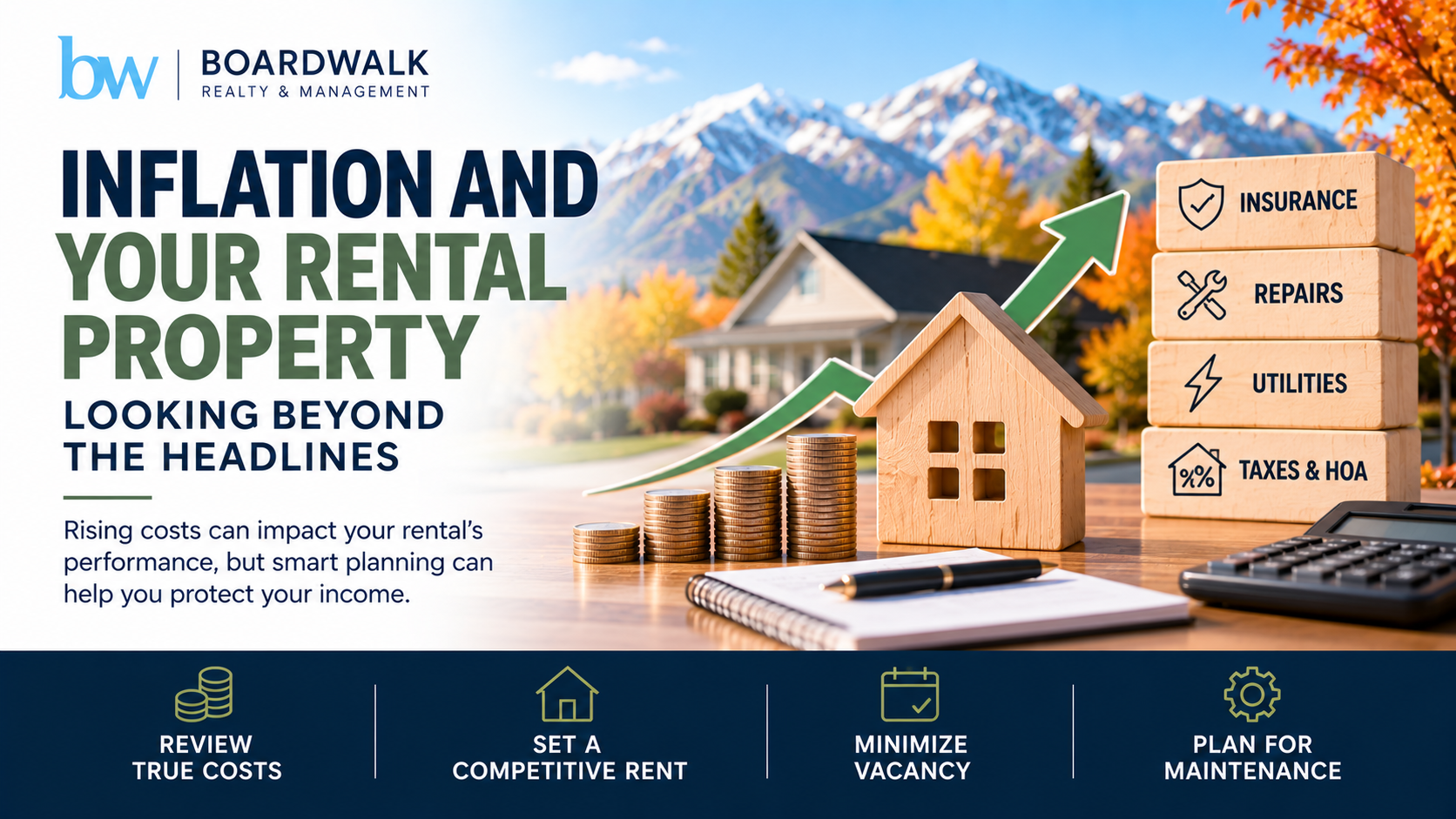
Expenses worth reviewing include:
- Property insurance: Premium increases can raise annual ownership costs.
- Maintenance and repairs: Labor, materials, and equipment costs can affect repair estimates.
- Utilities: Water, sewer, gas, and electricity expenses may change independently of rent.
- Property taxes: Changes in assessments and tax obligations can affect profitability.
- HOA fees: Community operating costs and assessments may increase.
- Capital improvements: Replacing major systems can require substantial investment.
The takeaway: Rather than applying one inflation percentage to every expense, owners should review each cost individually to understand where their money is going.
Why Rental Prices Can't Automatically Follow Inflation
One of the biggest challenges for rental-property owners is that rising expenses don't automatically justify higher rents in the marketplace.
An owner's expenses help determine what a property needs to earn.
Comparable properties and renter demand determine what it can realistically earn.
Even when inflation increases ownership costs, tenants still compare available rentals based on price, location, condition, amenities, and overall value.
National rental statistics can also be misleading when applied to individual properties.
For example, the rent component of the Consumer Price Index reflects rental agreements already in place as well as newer leases. Federal Reserve research explains that these measures can lag changes in asking rents for newly available properties.
That means a national inflation report may tell a different story from the competition your rental property faces today.
What Should Utah Owners Consider When Setting Rent?
An effective rental-pricing strategy should account for:
- Comparable properties in the same neighborhood
- Current rental inventory
- Property size, condition, and amenities
- Competing rental incentives and concessions
- Seasonal leasing demand
- Inquiry and showing activity
- Application volume
- Days on the rental market
The goal isn't simply to charge more rent. It's to find the right price that attracts qualified residents while protecting long-term rental income.
Vacancy Can Cost More Than a Lower Rental Price
A higher advertised rent only benefits an owner when someone actually pays it.
Consider this simplified example.
An owner has a rental property that could lease for $2,000 per month but decides to advertise it for $2,100.
Potential additional income:
| Scenario | Amount |
|---|---|
| Market-supported monthly rent | $2,000 |
| Higher advertised rent | $2,100 |
| Additional monthly rent | $100 |
| Additional income over 12 occupied months | $1,200 |
| One extra vacant month at $2,000 | $2,000 |
By holding out for an additional $100 per month, the owner could potentially earn $1,200 more over a full year.
But if the higher asking price results in one additional month of vacancy, the $2,000 in missed rent exceeds that potential annual increase.
And that's before accounting for utilities, ongoing ownership expenses, or additional marketing and turnover costs.
Why Strategic Pricing Matters
Every property requires its own analysis, but the example demonstrates an important principle:
Maximizing advertised rent isn't always the same as maximizing actual rental income.
In some situations, a timely pricing adjustment can help reduce vacancy and protect overall performance.
The same principle applies to lease renewals.
Keeping a dependable resident may provide financial value when compared with the potential costs of turnover, cleaning, repairs, advertising, and vacancy.
Build a Budget Around Your Property, Not National Headlines
A successful rental-property budget should begin with the property's actual financial performance.
Instead of assuming expenses will rise by the same percentage as inflation, owners should review their bills, property condition, and anticipated maintenance needs.
Questions Worth Asking
- Which operating expenses increased over the past year?
- Are insurance premiums or property taxes changing?
- Are any major systems approaching the end of their useful lives?
- Have repair costs increased?
- Are there recurring maintenance problems?
- Is the property competitively priced?
- Are current rental rates supporting the property's expenses?
- How much should be reserved for future repairs?
These questions help owners identify where expenses are changing and where adjustments may be necessary.
Preventive Maintenance Can Help Control Long-Term Costs
Inflation makes preventive maintenance especially important.
When labor and materials become more expensive, allowing a small problem to develop into a major repair can create additional financial pressure.
Routine inspections and timely maintenance can help identify issues before they become more disruptive.
Important areas include:
- Plumbing leaks and water damage
- Roofs and drainage
- Heating and cooling equipment
- Water heaters
- Exterior weatherproofing
- Appliances and major systems
- Seasonal winterization
Preventive maintenance cannot eliminate every unexpected expense.
However, identifying problems early may help reduce avoidable damage, emergency repairs, and disruptions for residents.
Plan for Repairs and Unexpected Expenses
Every rental property will eventually require repairs, maintenance, and replacement of major components.
Building financial reserves can help owners prepare for those expenses rather than responding to every unexpected repair as a financial emergency.
The appropriate reserve will depend on several factors, including:
- Property age
- Condition
- Major equipment and systems
- Repair history
- Anticipated capital improvements
- Financial obligations
An older property with aging mechanical systems may require a different reserve strategy than a recently constructed home.
The goal is to create financial flexibility before an unexpected expense occurs.
Focus on What Property Owners Can Control
Rental-property owners cannot control the national inflation rate, insurance-market trends, or the broader economy.
But they can make informed decisions about how their properties are managed.
Some of the most valuable areas to focus on include:
1. Competitive Rental Pricing
Regularly evaluate comparable properties and leasing activity to keep asking rents aligned with the market.
2. Vacancy Management
Consider the relationship between asking rent, marketing time, and actual income collected.
3. Tenant Retention
Evaluate lease renewals carefully, considering both market conditions and potential turnover expenses.
4. Maintenance Planning
Address repair concerns promptly and schedule preventive maintenance when appropriate.
5. Expense Monitoring
Review operating costs regularly to identify changes that may affect profitability.
6. Long-Term Investment Planning
Budget for anticipated repairs, capital improvements, and changes in the local rental market.
The Bottom Line: Look Beyond Inflation Headlines
Inflation can increase the cost of owning and maintaining a rental property.
But higher expenses don't automatically mean the market will support higher rent.
That's why rental-property owners need to look beyond national headlines and focus on the financial performance of their individual investments.
A rental property's success depends on both the income it generates and the expenses required to maintain it.
Understanding those two sides of the equation can help owners make better decisions about pricing, vacancy, maintenance, and long-term planning.
Protect Your Rental Investment With Boardwalk Realty & Management
At Boardwalk Realty & Management, we regularly review rental pricing and leasing activity to help Utah property owners respond to changing market conditions.
From competitive rental pricing and tenant communication to maintenance coordination and ongoing property management, our team helps owners make informed decisions about their investments.
Whether you're managing one rental property or expanding your portfolio, understanding your property's operating expenses and rental potential is an important part of protecting its long-term performance.
Learn more about our services: Boardwalk Property Management
Contact our team: Contact Boardwalk
Phone: (801) 748-1044
Email: info@rentfromboardwalk.com
This article is provided for general informational purposes and is not financial, tax, or investment advice. Rental-market conditions and operating expenses vary by property and location.