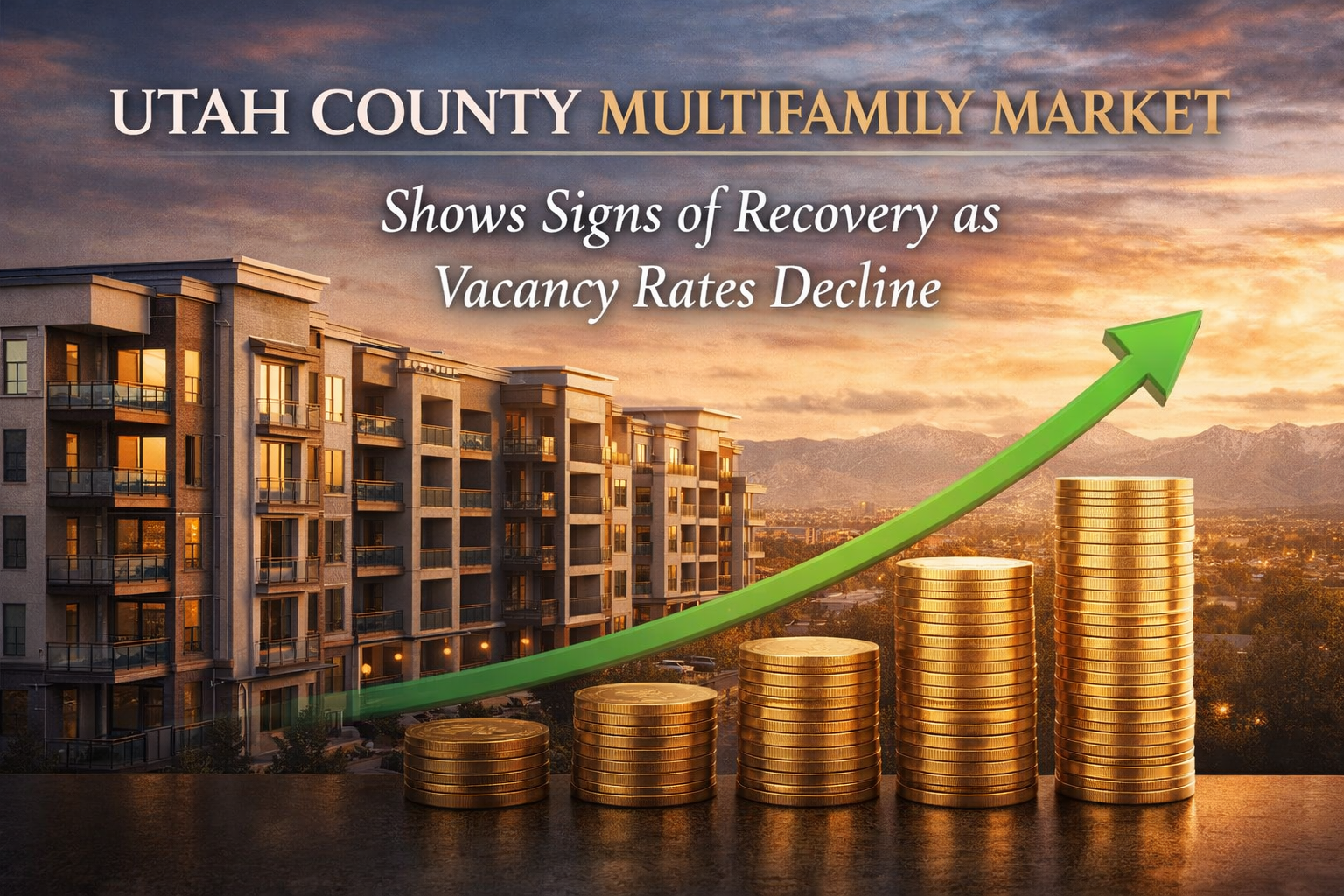
Utah County’s multifamily housing market is beginning to stabilize after a period of elevated vacancies and rapid construction. Recent trends suggest that the imbalance between supply and demand is easing—offering cautious optimism for investors, property managers, landlords, and even tenants.
Vacancy Rates Are Trending Down
Over the past few years, Utah’s rental market experienced a noticeable increase in vacancy rates. This was largely driven by a surge in newly constructed apartment communities entering the market at the same time.
However, recent data shows a different story.
Key insight:
- Stabilized vacancy rates (excluding new construction) are closer to the 3% range
- Existing, established properties are still performing well
This gap between total vacancy and stabilized vacancy is important. It shows that the market isn’t weak—it’s simply adjusting after a temporary oversupply.
Supply Surge Is Slowing
The rise in vacancies can be traced back to a major construction boom across Utah County.
Thousands of new units were delivered in a short period, creating short-term competition among landlords.
Now, that trend is shifting.
What’s changing:
- Higher interest rates
- Increased construction costs
- Stricter lending conditions
These factors are slowing down new developments, which will help bring supply and demand back into balance over time.
Demand Remains Strong
Even with recent fluctuations, Utah continues to see strong long-term demand for rental housing.
Key drivers:
- Population growth
- Job creation across the Wasatch Front
- Continued in-migration
- Low unemployment rates
At the same time, homeownership remains difficult for many due to high home prices and interest rates. This keeps more people renting for longer periods.
Rents Are Stabilizing
After several years of rapid rent increases, pricing has begun to level out—and in some areas, slightly decline.
This creates a more balanced environment for tenants.
What renters may notice:
- More available options
- Increased negotiating power
- Competitive pricing
What landlords are doing:
- Offering concessions (free rent, reduced deposits)
- Providing flexible lease terms
- Improving property amenities
While this may impact short-term revenue, it helps maintain occupancy and reduces long-term vacancy losses.
Signs of Market Recovery
The Utah County rental market is beginning to rebalance due to:
- Slowing construction activity
- Continued job growth
- Strong renter demand
Across the Wasatch Front, occupancy rates are improving, and absorption is starting to catch up with new supply.
What This Means for Tenants
For renters, this shift creates opportunity.
You may benefit from:
- Better pricing
- More unit availability
- Lease flexibility
- Incentives from property managers
If you're currently searching for a rental, this is one of the most favorable markets in recent years.
👉 Browse available rentals here: View Available Properties
What This Means for Owners & Investors
For property owners and investors, this is a transition period.
Short-term challenges:
- Increased competition
- Pressure on rental pricing
- More concessions required
Long-term outlook:
- Strong population-driven demand
- Economic growth in Utah
- Gradual return to market balance
Owners who focus on:
- Competitive pricing
- Property condition
- Tenant retention
will be best positioned to succeed.
👉 Learn more about our management services: Property Management Services
Bottom Line
Utah County’s multifamily market isn’t declining—it’s resetting.
The recent decrease in vacancy rates is an early sign that the market is absorbing excess supply and moving toward equilibrium.
While short-term challenges remain, the long-term outlook is strong, supported by continued economic growth and sustained housing demand.
📌 Need Help Navigating the Market?
Whether you're looking for your next rental or need help managing your investment property, our team is here to help.
👉 Contact us: (801)748-1044 👉 Explore rentals: https://bwprentals.com/search-homes/rentals/
Staying informed is the first step to making smarter real estate decisions.