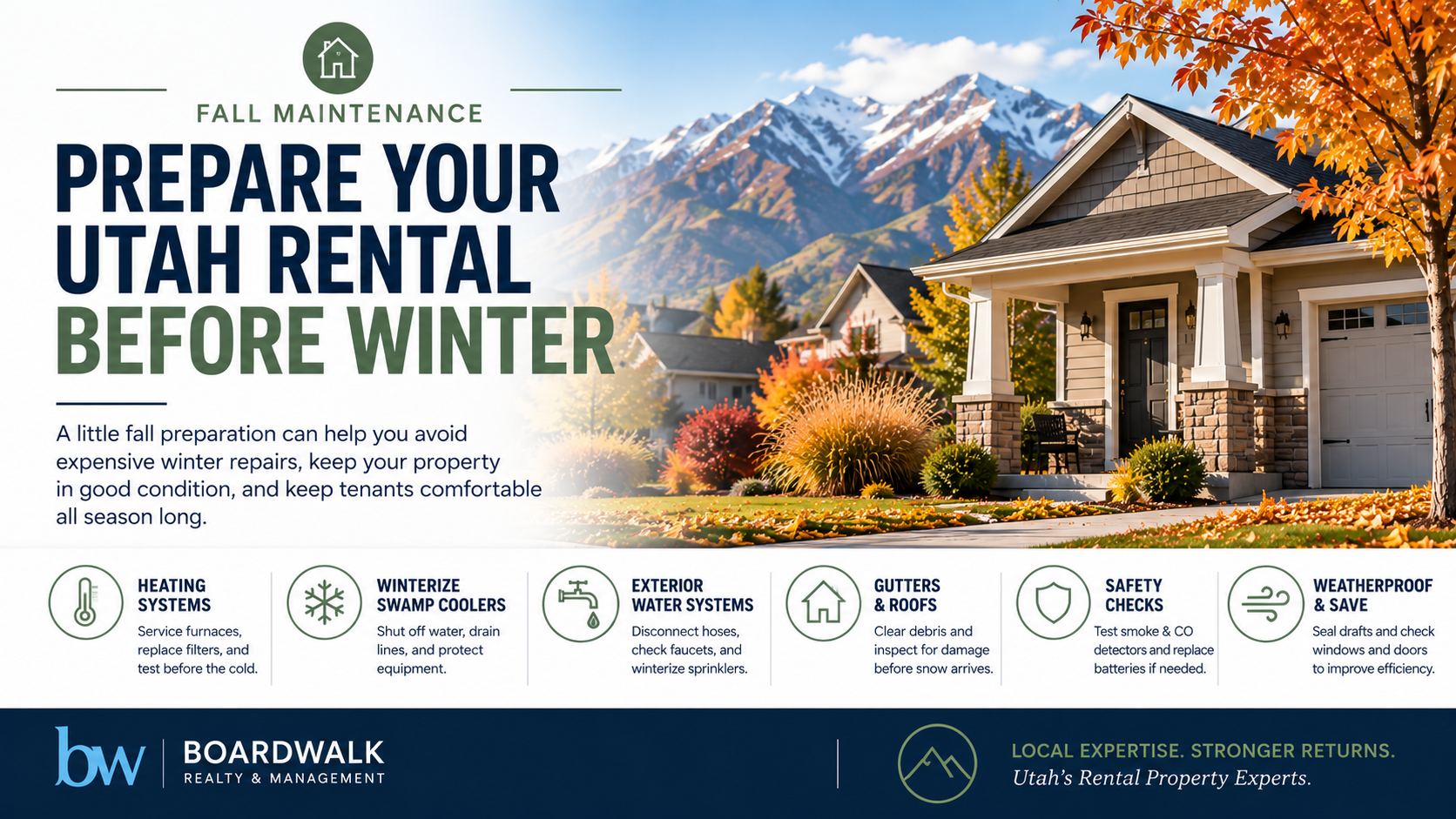
Fall in Utah doesn't last forever.
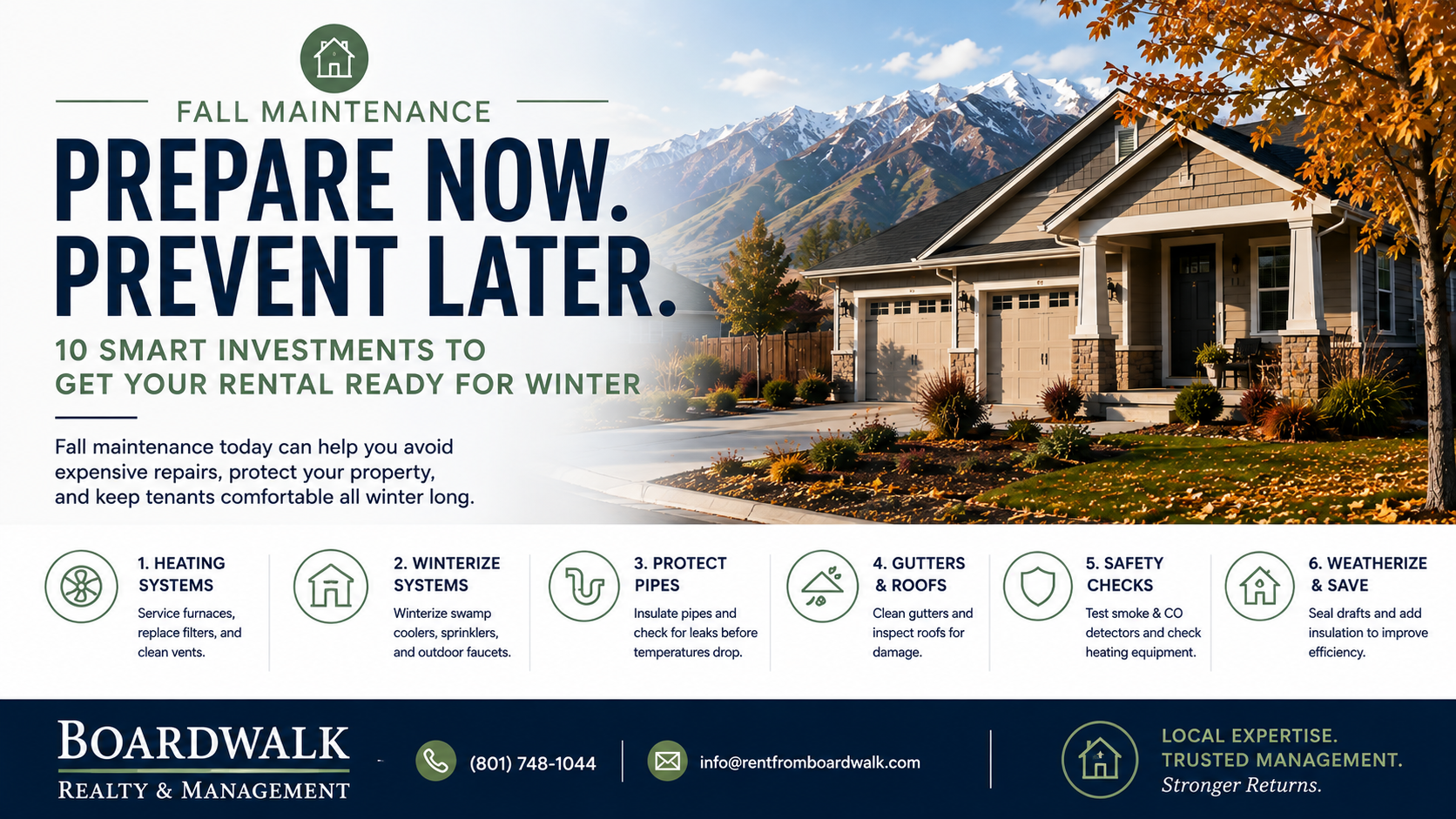
Warm afternoons can quickly give way to freezing nights, snow, and months of heavy use for heating systems. For rental-property owners, that makes October one of the best times of year to address preventive maintenance.
A relatively small investment now can help prevent a much larger repair later.
The goal is simple: find the problems in October instead of discovering them during the first freezing night of winter.
Here are some of the most important areas Utah rental-property owners should review before colder weather arrives.
1. Service the Furnace Before You Actually Need It
The first freezing night is a terrible time to discover that a furnace isn't working.
Before temperatures drop significantly, heating systems should be tested to make sure they're operating correctly.
Fall maintenance may include:
- Replacing or cleaning furnace filters
- Testing the thermostat
- Checking airflow from vents
- Looking for unusual sounds or odors
- Making sure supply and return vents aren't obstructed
- Having heating equipment professionally inspected when appropriate
Utah's State Fire Marshal recommends annual professional inspection and maintenance of heating equipment and chimneys.
For owners, preventive furnace maintenance isn't just about comfort.
A heating problem found during a scheduled fall inspection is usually much easier to handle than an emergency no-heat call on a freezing winter night.
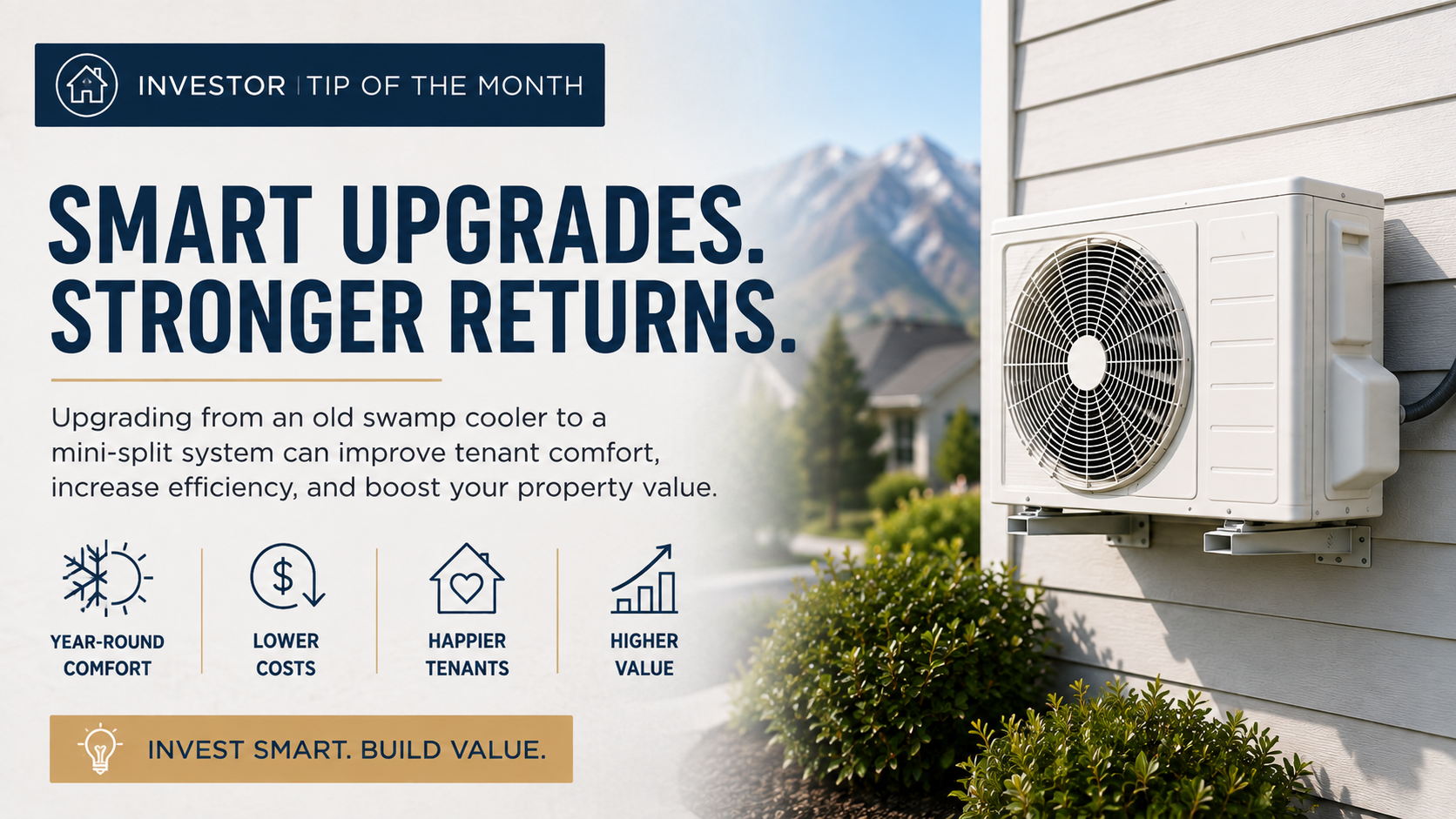
2. Winterize Swamp Coolers
Evaporative coolers—or swamp coolers—are common on many Utah properties.
Once cooling season ends, they shouldn't simply be switched off and forgotten until next summer.
Depending on the system and manufacturer requirements, winterization may include:
- Shutting off the water supply
- Draining water from the unit
- Draining or protecting the supply line
- Cleaning mineral deposits and debris
- Inspecting components for wear or corrosion
- Protecting the cooler from winter weather as appropriate
Any remaining water exposed to freezing temperatures can potentially damage lines or equipment.
Fall is also a good opportunity to identify worn components before the next cooling season.
Proper winterization can help protect the equipment and extend its useful life.
3. Protect Exterior Faucets and Water Lines
Water and freezing temperatures are an expensive combination.
Before the first hard freeze, inspect the property's exterior plumbing.
That includes:
- Disconnecting garden hoses
- Checking exterior faucets
- Addressing leaking hose bibs
- Protecting vulnerable exterior water lines
- Inspecting plumbing in unheated areas
- Checking exposed pipes in garages, crawlspaces, and utility areas
A small leak in October can become a much larger problem once temperatures drop below freezing.
Owners should also know where the property's main water shutoff is located.
In the event of a broken pipe, being able to stop the water quickly can significantly reduce damage.
4. Winterize the Irrigation System
Sprinkler systems are another easy item to overlook.
Water left inside vulnerable irrigation components can freeze, expand, and damage the system.
Depending on the property's irrigation design, professional winterization may be appropriate.
Owners should review:
- Sprinkler lines
- Valves
- Backflow equipment
- Exterior irrigation connections
- Exposed components
If you're unsure how a particular system should be winterized, it's better to have a qualified professional handle it than risk damage by guessing.
5. Clear Gutters and Check Downspouts
Once leaves begin falling, gutters can fill quickly.
Clogged gutters prevent rain and melting snow from draining properly and may direct water toward areas where you don't want it.
Before winter, check gutters and downspouts for:
- Leaves
- Branches
- Dirt and debris
- Loose sections
- Poor drainage
- Damaged downspouts
Downspouts should direct water away from the structure whenever possible.
This simple maintenance task can help protect roofing, fascia, siding, walkways, landscaping, and the foundation from unnecessary moisture.
6. Inspect the Roof Before Snow Arrives
Roof problems become much harder to evaluate once they're covered in snow.
Fall is a good time for a visual inspection.
Look for:
- Missing or damaged shingles
- Damaged flashing
- Loose materials
- Signs of previous leaks
- Debris accumulation
- Damaged gutters
- Other visible deterioration
If there are already signs of water intrusion inside the property, don't wait until winter to investigate them.
For steep, high, or otherwise unsafe roofs, use a qualified professional rather than attempting to inspect the roof yourself.
A small roof repair now may prevent a much more expensive water-damage problem later.
7. Seal Drafts Around Windows and Doors
Not every useful fall improvement has to be expensive.
Weatherproofing can be one of the simplest ways to improve a rental property's winter performance.
Inspect:
- Door weather stripping
- Exterior door sweeps
- Window caulking
- Gaps around exterior penetrations
- Basement windows
- Other obvious sources of drafts
Damaged weather stripping and failed caulking can allow heated air to escape while cold air enters.
Fixing those areas can improve tenant comfort while reducing unnecessary strain on the heating system.
Owners planning longer-term improvements may also want to evaluate insulation in attics, basements, crawlspaces, and other poorly insulated areas.
8. Test Smoke and Carbon-Monoxide Alarms
Heating season makes carbon-monoxide safety especially important.
The Utah State Fire Marshal recommends installing and maintaining carbon-monoxide alarms and having fuel-burning heating equipment professionally inspected every year before cold weather arrives.
Fall inspections are a good opportunity to:
- Test smoke alarms
- Test carbon-monoxide alarms
- Replace batteries where appropriate
- Check device age
- Replace expired devices according to manufacturer instructions
- Confirm alarms are properly located
The State Fire Marshal recommends testing CO alarms at least monthly and replacing them according to manufacturer instructions.
Safety equipment should never be treated as an optional maintenance item.
9. Check Exterior Drainage Before Snow and Ice
Water should move away from the property—not collect against it.
Walk around the exterior and look for areas where water may pool near:
- Foundations
- Basement windows
- Window wells
- Walkways
- Driveways
- Low areas around the structure
Fall is a good time to correct simple drainage problems before snow accumulation and freeze-thaw cycles make them worse.
Also check that window wells are clear and that exterior drains aren't blocked by leaves or debris.
10. Look for Small Problems Before They Become Winter Emergencies
A good fall inspection shouldn't focus only on a checklist.
It's also an opportunity to look at the property as a whole.
Watch for:
- Small plumbing leaks
- Water stains
- Damaged exterior materials
- Loose railings
- Cracked weather seals
- Malfunctioning locks
- Electrical concerns
- Signs of pests
- Unusual furnace or water-heater behavior
- Deferred maintenance reported by tenants
Individually, some of these issues may seem minor.
But winter has a way of making existing problems more expensive.
Where Should Owners Invest First?
Not every rental property needs every upgrade.
If you're working with a limited fall-maintenance budget, prioritize the areas where failure could create the greatest safety risk or property damage.
Priority 1: Safety and Essential Systems
Start with:
- Heating
- Smoke and CO alarms
- Active leaks
- Vulnerable plumbing
- Serious roof issues
- Electrical or gas concerns
Priority 2: Winterization
Next, address:
- Swamp coolers
- Sprinklers
- Exterior faucets
- Exposed water lines
- Gutters and drainage
Priority 3: Efficiency and Long-Term Improvements
Then consider:
- Weather stripping
- Caulking
- Insulation
- Thermostat upgrades
- Aging HVAC equipment
- Drainage improvements
- Other energy-efficiency projects
This approach helps owners put maintenance dollars where they can have the greatest impact.
Preventive Maintenance Is an Investment, Not Just an Expense
It's easy to postpone maintenance when everything appears to be working.
That's exactly why fall maintenance matters.
A furnace tune-up isn't as dramatic as replacing a failed furnace in January.
Insulating a vulnerable pipe isn't as noticeable as repairing a flooded basement.
Cleaning gutters isn't as urgent as responding to a roof leak.
And that's the point.
Good preventive maintenance is supposed to be uneventful.
For rental-property owners, spending a little in October may help avoid emergency vendor calls, property damage, tenant frustration, insurance claims, and significantly larger repair bills later.
The best winter maintenance emergency is the one you prevent in the fall.
Prepare Your Utah Rental Before Winter Arrives
Seasonal maintenance is easier when someone is keeping track of the property throughout the year.
Boardwalk Realty & Management helps Utah rental-property owners coordinate maintenance, communicate with residents, address repair needs, and protect the long-term condition of their investments.
Contact our team: Boardwalk Contact Us
Call: (801) 748-1044
Email: info@rentfromboardwalk.com
Learn more: Boardwalk Property Management Services
Looking for Utah real estate? Search Utah Houses
Maintenance requirements vary by property, equipment, manufacturer instructions, and local conditions. Work involving gas appliances, electrical systems, roofs, HVAC equipment, or other potentially hazardous systems should be performed by appropriately qualified professionals when necessary.