
Utah's fall weather can feel deceptively mild.
One week can bring warm afternoons and open windows. A few weeks later, temperatures can drop below freezing and heating systems are suddenly running every day.
For rental property owners, that makes fall one of the most important preventive-maintenance seasons of the year.
The goal isn't simply to prepare a property for colder weather. It's to find small problems before winter turns them into expensive emergencies.
A leaking irrigation line, neglected swamp cooler, struggling furnace, clogged gutter, or exposed pipe may not seem urgent in September.
In January, it can be a very different story.
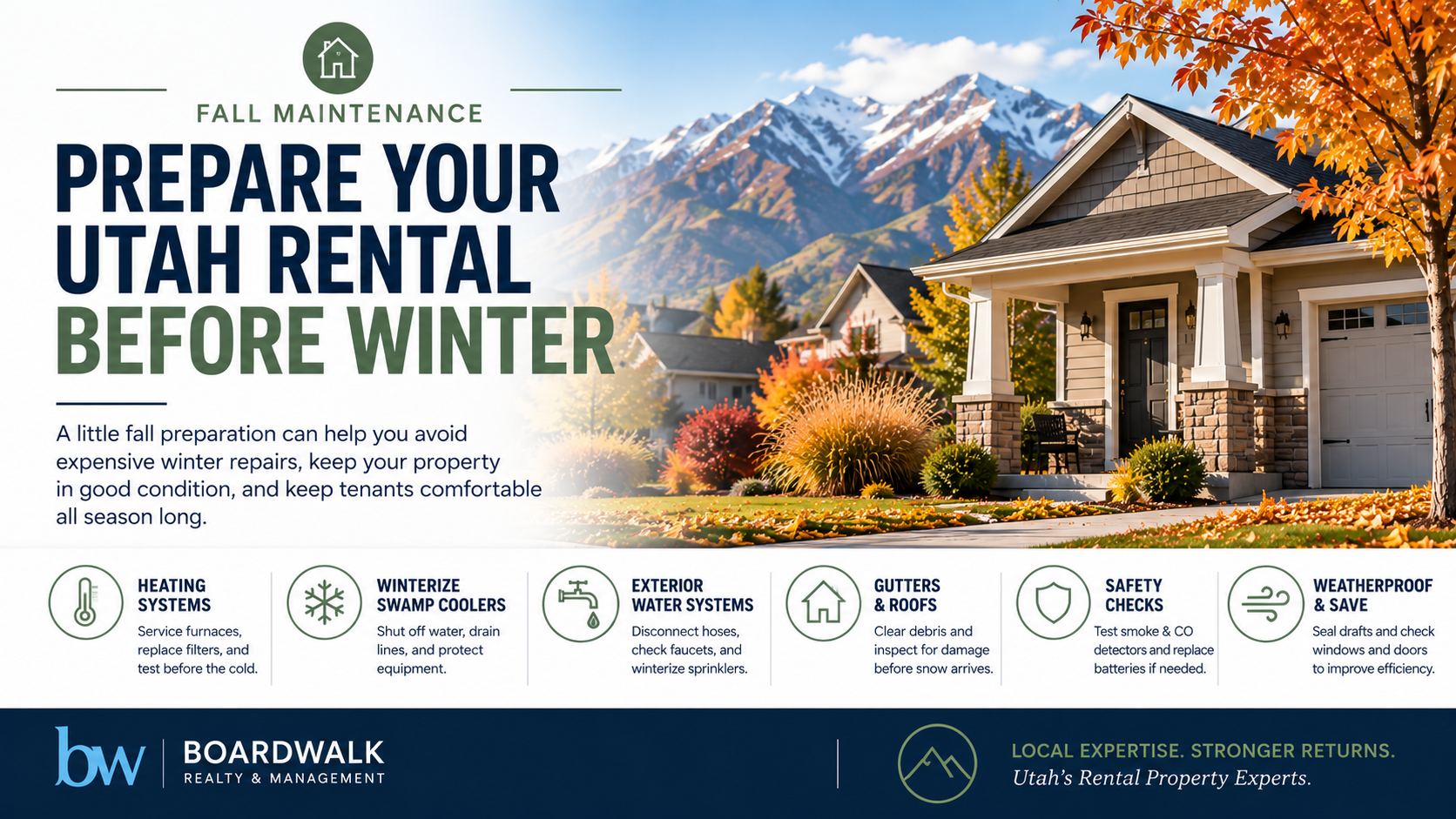
Here are some of the most important fall maintenance items Utah rental property owners should consider.
1. Winterize Swamp Coolers Before Freezing Temperatures Arrive
Evaporative coolers—commonly called swamp coolers—are still found on many Utah properties.
Once cooling season ends, they shouldn't simply be turned off and forgotten until next summer.
A proper fall shutdown can include:
- Shutting off the water supply
- Draining the water line and cooler pan
- Removing mineral deposits and sediment
- Inspecting the float, pump, belt, motor, and housing
- Checking for corrosion or deterioration
- Protecting the unit appropriately for winter
Utah's hard water can leave significant mineral buildup inside evaporative coolers.
Leaving water in the system through freezing weather can also contribute to damaged lines and components.
This is one of those inexpensive seasonal services that can help extend equipment life and prevent a much larger repair later.
2. Service the Furnace Before Everyone Needs a Furnace Technician
Don't wait for the first freezing night to discover that the furnace isn't working correctly.
Fall is the ideal time to have heating systems inspected and serviced.
At minimum, owners should consider:
- Replacing dirty furnace filters
- Checking airflow
- Inspecting vents
- Confirming the thermostat works correctly
- Checking for unusual sounds or odors
- Having fuel-burning heating equipment professionally serviced when appropriate
Utah's Department of Environmental Quality recommends regular furnace-filter replacement and keeping vents clean to maintain airflow and efficiency.
The Utah State Fire Marshal also recommends having heating equipment and chimneys inspected annually by a qualified professional.
Preventive service is usually much easier to schedule than an emergency no-heat call during the first major cold snap.
3. Test Smoke and Carbon Monoxide Alarms
Heating season makes carbon monoxide safety especially important.
Utah public-health guidance recommends routinely checking household CO detectors and having heating systems, water heaters, and other fuel-burning appliances serviced by qualified technicians.
Fall is an excellent time to:
- Test smoke alarms
- Test carbon monoxide alarms
- Replace batteries when needed
- Check the age of the devices
- Replace alarms that have reached the manufacturer's recommended end of life
Owners should also make sure alarms are installed in the appropriate locations for the property.
A working detector is a small investment with an enormous safety benefit.
4. Protect Plumbing Before the First Hard Freeze
Frozen pipes can turn into one of winter's most expensive property emergencies.
Pay particular attention to plumbing located in:
- Exterior walls
- Garages
- Crawlspaces
- Basements
- Utility rooms
- Other poorly insulated areas
Insulating vulnerable water lines can reduce the risk of freezing.
Owners should also make sure residents know where the property's main water shutoff is located when appropriate.
That matters because quickly shutting off water after a pipe failure can dramatically reduce property damage.
5. Winterize Sprinklers and Exterior Water Systems
Don't forget about the systems outside the house.
Before sustained freezing temperatures arrive, irrigation systems may need to be properly shut down and winterized.
Also inspect:
- Exterior faucets
- Hose bibs
- Exposed water lines
- Backflow equipment
- Irrigation valves
A small amount of trapped water can become a much larger problem when it freezes and expands.
If you're unsure how a particular irrigation system should be winterized, have it handled professionally rather than guessing.
6. Clean Gutters After the Leaves Fall
Gutters aren't exciting, but they're an important part of protecting the building.
Leaves and debris can prevent rainwater and melting snow from draining correctly.
That can contribute to water overflowing near:
- Roofing
- Fascia
- Siding
- Foundations
- Walkways
- Landscaping
Fall gutter cleaning is also a good opportunity to look for loose gutters, damaged downspouts, roof issues, and drainage problems before snow arrives.
Water should be directed away from the building—not toward it.
7. Inspect the Roof Before Snow Covers It
Some roof problems are much easier to identify before winter.
Look for signs such as:
- Missing or damaged shingles
- Damaged flashing
- Visible deterioration
- Debris accumulation
- Previous leak areas
- Damaged gutters or drainage
A minor roof repair in fall may prevent water intrusion when snow begins accumulating and melting.
For multi-unit properties or roofs that are difficult or unsafe to access, use a qualified professional rather than attempting an inspection yourself.
8. Seal Drafts Around Windows and Doors
Weatherproofing can be one of the better low-cost investments owners make.
Utah DEQ specifically recommends addressing air leaks with measures such as weatherstripping and caulking.
Inspect:
- Exterior doors
- Window frames
- Basement windows
- Garage-to-home doors
- Other obvious air gaps
Improving air sealing can make the home more comfortable while reducing the amount of work required from the heating system.
For properties with significant energy loss, owners may also want to evaluate insulation in attics, basements, crawlspaces, and exterior walls.
9. Don't Ignore the Water Heater
Winter means more demand on hot-water systems.
Fall is a good opportunity to inspect the water heater for:
- Signs of leaking
- Corrosion
- Unusual sounds
- Venting problems
- Sediment buildup
- Deteriorated connections
Utah DEQ recommends periodically flushing water heaters to remove sediment and improve efficiency.
Fuel-burning water heaters should also have safe, unobstructed venting.
A slow leak discovered during an inspection is much easier to address than a failed tank discovered after water has spread through the property.
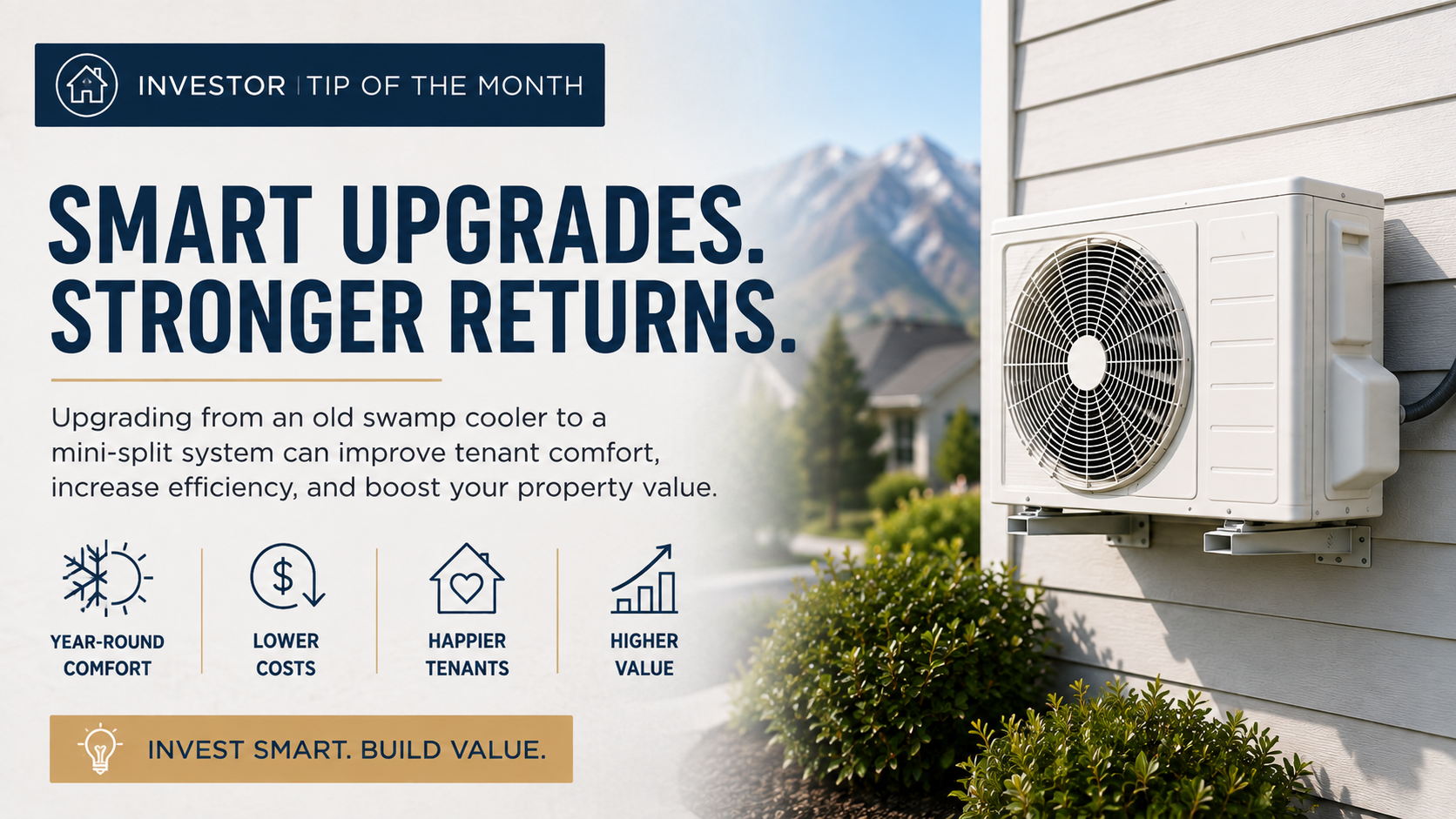
10. Consider Upgrades That Reduce Future Maintenance
Not every fall project has to be a repair.
For owners planning to hold a rental long term, fall can also be a good time to consider strategic improvements.
Depending on the property, those might include:
- Better attic insulation
- Air sealing and weatherstripping
- Pipe insulation
- A programmable or smart thermostat
- Replacing an aging furnace before failure
- Improving drainage
- Upgrading inefficient windows when replacement is already warranted
- Replacing deteriorating exterior components
The important distinction is between spending money and investing in the property.
A cosmetic upgrade may make a property look better.
A well-planned preventive upgrade can reduce operating costs, protect the building, improve resident comfort, and potentially prevent an emergency repair.
What Should Owners Prioritize First?
You don't necessarily need to complete every improvement at once.
Start with the items where failure could create the greatest safety risk or property damage.
First priority: heating, carbon monoxide safety, active leaks, vulnerable plumbing, and other safety concerns.
Next: swamp coolers, irrigation systems, gutters, roofs, and exterior water systems that need protection before freezing weather.
Then: efficiency improvements such as weatherstripping, insulation, thermostats, and longer-term equipment upgrades.
The goal is to enter winter knowing the property's major systems have been checked rather than waiting to find out what fails.
Preventive Maintenance Is an Investment
Preventive maintenance rarely feels urgent.
That's precisely why it's easy to postpone.
But for a rental-property owner, a relatively small fall maintenance expense can potentially prevent a much larger winter repair—not to mention emergency vendor calls, property damage, resident frustration, and unexpected vacancy.
The best winter maintenance problem is the one you find in the fall.
Get Your Utah Rental Ready for Winter
Boardwalk Realty & Management helps Utah rental-property owners stay ahead of seasonal maintenance instead of waiting for problems to become emergencies.
From coordinating maintenance and communicating with residents to protecting the long-term condition of the property, preventive management is an important part of protecting a rental investment.
Contact our team: Boardwalk Contact Us
Call: (801) 748-1044
Email: info@rentfromboardwalk.com
Learn more: Boardwalk Property Management Services
Looking for a home? See Available Properties
Maintenance needs vary by property, equipment, manufacturer requirements, and local conditions. When maintenance involves gas appliances, electrical systems, roofs, or other potentially hazardous work, use an appropriately qualified professional.