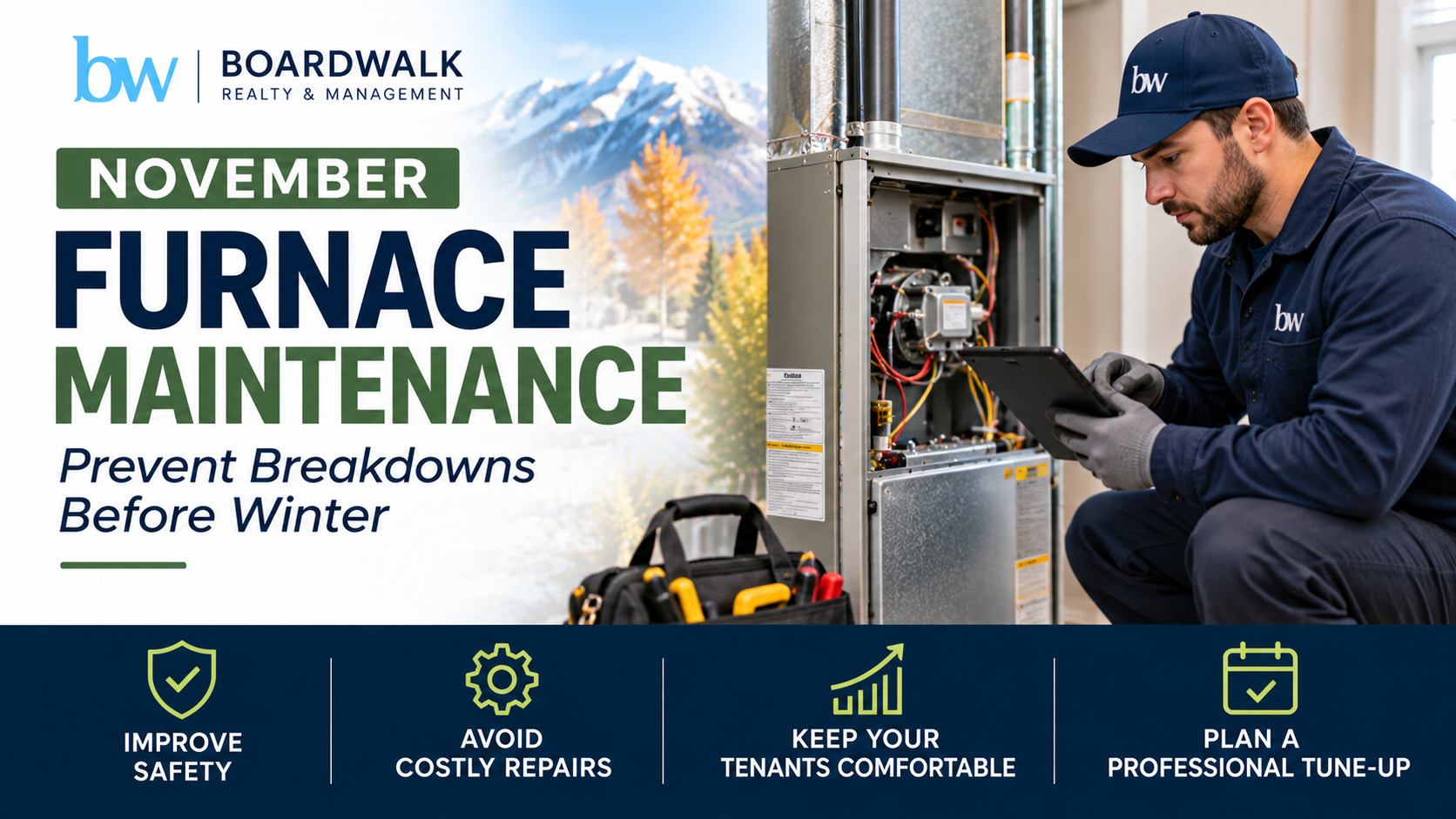
November Furnace Maintenance: Why Utah Rental Owners Should Invest in a Tune-Up Before Winter
November is here, and temperatures across Utah are dropping.
For rental-property owners, that means one of the most important systems in the home is about to face months of heavy use: the furnace.
A heating system might appear to be working perfectly well today. But after sitting unused through warmer months, hidden issues can become apparent when temperatures fall and the equipment starts running regularly.
That's why November is an important time to schedule a professional furnace inspection and tune-up if one hasn't already been completed.
A furnace tune-up is an expense worth planning for. An unexpected heating failure in the middle of winter can become a much bigger expense.
Here's why preventive furnace maintenance deserves a place in every Utah rental property's winter budget.
1. Why Furnace Maintenance Matters Before Utah Winter
Utah winters can bring freezing temperatures, snowstorms, and extended periods when residents depend on reliable indoor heating.
When a furnace stops working during these conditions, the problem becomes urgent.
Property owners may face emergency service calls, difficult scheduling, unexpected repair expenses, and uncomfortable residents.
A professional inspection gives an HVAC technician the opportunity to evaluate the heating system before it is under sustained winter demand.
The Utah State Fire Marshal recommends having heating equipment inspected and maintained annually by a qualified professional.
For rental owners, the goal is to identify potential problems before they become winter emergencies.
2. What Should a Professional Furnace Tune-Up Include?
A proper furnace tune-up involves more than simply turning on the thermostat and confirming that warm air comes out.
The specific work depends on the equipment, but a qualified HVAC technician may perform the following checks.
Inspect the Heat Exchanger
For gas furnaces, the heat exchanger is a critical component.
A technician should evaluate it for signs of deterioration or damage that could affect safe operation.
Check Burners and Ignition Components
Dirty burners, ignition problems, or worn components can affect how reliably the furnace starts and operates.
Inspect Venting and Exhaust Systems
Fuel-burning equipment must vent combustion gases safely.
A professional should inspect applicable venting and exhaust components for damage, deterioration, or obstructions.
Test Thermostat Operation
The technician should confirm that the thermostat communicates properly with the heating system and that the furnace responds as expected.
Check Airflow and Filters
Dirty filters and restricted airflow can make heating equipment work harder than necessary.
Inspect Electrical Connections and Motors
Loose connections, worn components, and motor problems may affect performance or reliability.
Evaluate Overall System Performance
A technician can check operating conditions, listen for unusual noises, and identify components that may require further attention.
A professional tune-up should help the owner understand the furnace's condition—not simply produce another invoice.
Owners should request documentation of the inspection and any recommended repairs.
3. The Cost of a Tune-Up vs. the Cost of an Emergency
Some owners hesitate to approve preventive maintenance because the furnace is still working.
It's understandable to question an expense when there is no obvious problem.
But waiting until something breaks isn't always the most economical approach.
Consider two situations.
Scenario A: Preventive Maintenance
A professional HVAC technician inspects the furnace in November.
During the inspection, the technician identifies a worn component, restricted airflow, or another issue requiring attention.
The owner can review the recommendation, approve the appropriate work, and schedule it before the problem becomes urgent.
Scenario B: Emergency Breakdown
The furnace stops heating during a freezing winter night.
The resident reports having no heat.
The owner must arrange urgent service, determine whether parts are available, and address the heating failure as quickly as possible.
Depending on the circumstances, this could involve emergency service charges, additional labor, or more extensive repairs.
Preventive maintenance does not guarantee a furnace will never break down. But it creates an opportunity to address developing problems before they become more disruptive and expensive.
4. Furnace Maintenance Can Help Protect Energy Efficiency
A furnace doesn't need to stop working completely to create unnecessary costs.
Dirty filters, restricted airflow, and neglected components can reduce efficiency and place additional strain on the system.
ENERGY STAR recommends checking air filters regularly and scheduling annual professional heating-system maintenance.
A properly maintained furnace is better positioned to operate as intended.
For property owners, that can mean:
- Reducing avoidable equipment strain
- Supporting more efficient heating
- Identifying maintenance needs earlier
- Helping protect major mechanical components
- Supporting consistent comfort for residents
Maintaining the furnace is also a way of protecting an expensive asset already installed in the property.
5. Heating Safety Is Just as Important as Repair Costs
Furnace maintenance isn't only a financial decision.
It's also an important safety precaution.
Gas furnaces and other fuel-burning appliances require proper combustion, ventilation, and exhaust.
The Utah State Fire Marshal recommends annual professional inspections of heating equipment and maintaining carbon-monoxide alarms.
A November heating inspection is a good opportunity to confirm that safety-related concerns have been evaluated.
Don't Forget Carbon-Monoxide Detectors
Carbon monoxide is an odorless, colorless gas that can be produced when fuels burn incompletely.
Property owners should ensure that required carbon-monoxide alarms are installed, operational, and maintained according to applicable requirements and manufacturer instructions.
Smoke alarms should also be tested and maintained.
An inspection is not simply about keeping the home warm. It's about helping keep the heating system operating safely.
6. November Is Also a Good Time to Evaluate Older Furnaces
Not every furnace needs to be replaced because it's old.
But equipment age should be part of an owner's maintenance planning.
If a furnace has required repeated repairs, struggles to maintain temperatures, or has significant component deterioration, an HVAC professional may recommend evaluating replacement options.
Before making that decision, owners should consider:
- The furnace's age and condition
- Recent repair history
- The cost of recommended repairs
- Availability of replacement parts
- Current operating performance
- The expected cost of replacement
Replacing a furnace is a significant investment.
But continuing to repair unreliable equipment can also become expensive over time.
A professional inspection can help owners make a more informed repair-versus-replacement decision instead of waiting for a complete failure.
7. Why Furnace Maintenance Matters for Tenant Satisfaction
Reliable heating is one of the basic expectations residents have when renting a home.
A heating failure can quickly create frustration, especially during freezing weather.
It can also require urgent coordination between the tenant, property manager, and HVAC contractor.
Scheduling preventive service before peak winter demand may reduce the likelihood of avoidable disruptions.
It also demonstrates that the property is being maintained proactively rather than only when something goes wrong.
For owners interested in long-term tenant retention, maintaining essential systems is an important part of protecting the resident experience.
8. Should Owners Budget for Annual Furnace Tune-Ups?
Yes. A professional furnace inspection and tune-up should be considered a routine preventive-maintenance expense for Utah rental properties with applicable heating systems.
The exact service cost depends on the type of equipment, its condition, the contractor, and the work included.
An inspection fee may not cover repairs or replacement parts, so owners should ask what is included before approving service.
Rather than waiting for an unexpected repair bill, owners can incorporate annual HVAC maintenance into their property's operating budget.
For example, a maintenance plan may include:
- An annual professional furnace inspection
- Filter checks and replacements as needed
- Documenting equipment condition
- Reviewing recommended repairs
- Monitoring recurring problems
- Planning for future replacement of aging equipment
The purpose is not to spend money unnecessarily. It's to spend strategically on maintenance that protects the property.
9. What If the Furnace Seems to Be Working Fine?
This is one of the most common reasons owners postpone service.
The tenant hasn't complained.
The thermostat works.
The furnace turns on.
So why schedule an inspection?
Because a furnace can operate while still having developing maintenance or safety issues.
An inspection may identify conditions that aren't obvious to a resident or owner.
It's similar to maintaining a vehicle.
You don't necessarily wait until the engine stops working before scheduling service.
The same preventive approach makes sense for a rental property's heating system.
10. Don't Wait Until Every HVAC Company Is Busy
When temperatures drop, heating contractors can experience increased demand from homeowners and rental-property managers dealing with no-heat situations.
That can make scheduling more difficult.
ENERGY STAR recommends arranging heating-system checkups in the fall, before the busiest winter period.
If your Utah rental property's furnace hasn't been inspected this season, November is a good time to make it a priority.
Waiting until December or January may mean competing for appointments with owners facing urgent heating failures.
The Bottom Line: Spend on Prevention Before Paying for an Emergency
Furnace maintenance is easy to overlook when everything appears to be working.
But for Utah rental-property owners, the heating system is one of the most important—and potentially expensive—components of the home.
A professional inspection and tune-up can help identify problems, support safe operation, improve reliability, and guide future maintenance decisions.
It won't eliminate every possible breakdown.
But it can help owners avoid preventable problems and make more informed decisions before the harshest winter weather arrives.
A scheduled furnace tune-up in November is a planned investment. An unexpected furnace failure in January can become an expensive emergency.
Protect Your Utah Rental Property This Winter
At Boardwalk Realty & Management, we understand how important it is to stay ahead of seasonal maintenance.
From coordinating vendor appointments and communicating with residents to tracking repair needs and helping owners make informed maintenance decisions, our team works to protect rental properties throughout the year.
If your rental property's furnace hasn't been professionally inspected this heating season, now is a good time to review its maintenance needs.
Learn about our property management services: Boardwalk Property Management
Contact our team: Contact Boardwalk
Phone: (801) 748-1044
Email: info@rentfromboardwalk.com
This article is provided for general informational purposes. Furnace maintenance requirements depend on the equipment and manufacturer recommendations. Gas, electrical, combustion, and other technical inspections or repairs should be performed by appropriately qualified professionals.
Sources: